No products in the cart.

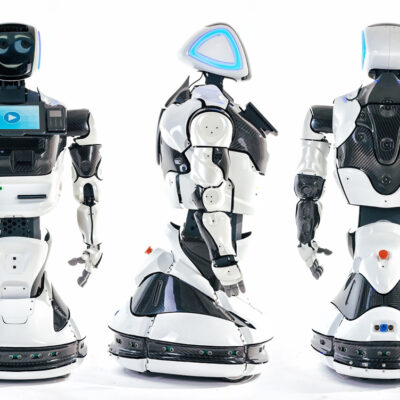

Introducing automation and robotics into your business can greatly improve its profitability by increasing productivity, reducing costs, and improving overall efficiency. Here are some steps to consider when leveraging automation with robotics:
- Identify areas for automation: Analyze your business processes and identify tasks that are repetitive, time-consuming, or prone to errors. These are prime candidates for automation.
- Set clear objectives: Define the specific goals you want to achieve through automation, such as increasing production output, reducing labor costs, improving product quality, or enhancing customer service.
- Research available technologies: Explore the various automation and robotics technologies suitable for your business. This could include robotic process automation (RPA), industrial robots, collaborative robots (cobots), autonomous vehicles, or machine learning algorithms.
- Assess cost-benefit: Evaluate the costs involved in implementing automation technologies and compare them with the potential benefits. Consider factors such as upfront investment, maintenance costs, training requirements, and potential ROI.
- Start with small-scale automation: Begin by automating a small portion of your operations as a pilot project. This allows you to test the feasibility and effectiveness of automation before scaling it up across your business.
- Collaborate with experts: Seek advice from automation experts, consultants, or robotics vendors who can provide guidance on the best technologies for your business needs. They can also assist with installation, programming, and integration with existing systems.
- Train your workforce: Provide training and re-skilling opportunities for your employees to adapt to the new automated processes. This ensures a smooth transition and enables them to work alongside the robots effectively.
- Optimize processes: Use automation as an opportunity to re-evaluate and streamline your business processes. Identify bottlenecks, remove unnecessary steps, and optimize workflows to maximize the benefits of automation.
- Monitor and measure performance: Implement systems to monitor and measure the performance of your automated processes. Collect data on key performance indicators (KPIs) such as productivity, efficiency, quality, and cost savings. Use this information to identify areas for further improvement.
- Continuous improvement: Regularly assess your automated processes and seek ways to optimize and refine them. Stay updated on new automation technologies and industry best practices to ensure your business remains competitive and profitable.
Remember that automation is not a one-time solution. It requires ongoing maintenance, updates, and adjustments to adapt to changing business needs and advancements in technology.
ROBOASIS – Marketplace robotics in USA